
Musical Dialogues between Cuba and West Africa in the Cold War
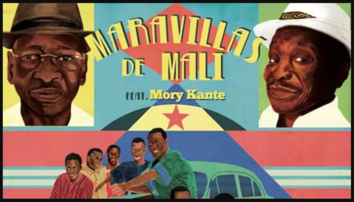
In the middle of the 1960s in Cuba, young Malian musicians created the band Las Maravillas de Mali....
South Atlantic - Africa - Caribbean - South America
The Atlantic Space Within Globalization - The Consolidation of Mass Cultures - The Steam Atlantic - Atlantic Revolutions and Colonialism
How can cultural exchanges across the Atlantic be theorized outside of Gilroy’s Black Atlantic heuristic, especially when looking at cultural practices developing in Africa? The idea of a Creole Atlantic allows for including South-South connections and situating a redefined, creolized Africa at the core of the Atlantic paradigm.
How can the theory of cultural exchanges across the Atlantic be reconceived outside of Paul Gilroy’s Black Atlantic heuristic? Critical observation of the “creative appropriation”1 of music and dance developed on the African continent has led to serious theoretical challenges to the idea of the Black Atlantic. Indeed, in the course of my multi-centred research on music and dance transatlantic circulations, I have explored the musical exchanges between Mali and Cuba during the Cold War, the contemporary local appropriation of salsa music and dance in Benin, and the return of American creolized square dances in the Ivory Coast as a result of the repatriation of former slaves in Liberia at the beginning of the 19th Century.2 Although these cultural processes could somehow be analyzed as paradigmatic manifestations of the Black Atlantic, they move beyond the limitations scholars have noted since Gilroy developed his pioneering concept almost three decades ago.
The historical, political and cultural dynamics crisscrossing the Atlantic that have shaped the music and dance forms I focus on – Cuban music, salsa dance, and creole quadrilles – could not be adequately covered by looking at them through the Black Atlantic lens. Therefore, I needed to find a theoretical frame that was able to accommodate the empirical cultural phenomena I observed at different points in space and time. I looked then for a transatlantic paradigm that would 1) involve Africa and the role of African agents in the making, circulation and appropriation of transatlantic creolized music and dance forms; 2) allow for grasping the imbalance and asymmetries of power that have been constitutive to the politics of the Atlantic space while also relating them to contemporary globalization processes; 3) move away from any type of racial bias that proved irrelevant with regards to the case studies I worked on. With this agenda in mind, this essay presents my proposal of a Creole Atlantic as a theoretical frame for understanding some transatlantic cultural phenomena outside the North American/European focus of Gilroy’s Black Atlantic.
An ever-growing body of literature interrogates Gilroy’s conceptualization of the Black Atlantic for its ability to grasp all kinds of transatlantic cultural circulations. Numerous scholars have ably pointed out the limitations of Gilroy’s Black Atlantic and explored some counterpoints to the allegedly North-American/European dialogue that Gilroy has favoured. Many of them advocated for an expansion of this heuristic, whether it be by including Africa at its core; by looking at South-South connections through other linguistic spaces and imperial histories; by including the Cold War and the Eastern Bloc in a postcolonial reading of the Black Atlantic; or even by expanding it towards the Indian Ocean.
In so doing, various epithets have been proposed in order to specify the various lenses through which the Atlantic space could be analyzed anew, either as “Red”3, “Brown” 4 or “Hybrid”5 among others. According to Law and Mann, a more inclusive way to think of the transatlantic space and to grasp the many frameworks that traverse it is to speak about “Atlantic worlds”6 in the plural form. While I partly agree with this suggestion, I nevertheless argue in the course of this essay that what I call the Creole Atlantic is a less neutral and therefore hopefully more efficient and fruitful development of the Black Atlantic heuristic, one that can explicate the ways in which, for instance, Cuban music and salsa dance is produced, consumed, and appreciated in West Africa.
Situated in West Africa, while looking at salsa and analyzing this phenomenon as emanating from what I call the Creole Atlantic, my objective is therefore three-fold: 1) connecting to Gilroy’s theorization parts of the Atlantic world that were not addressed by him; 2) extending thereby its spatiotemporal frame of analysis; 3) combining in the process different frameworks such as Denis-Constant Martin’s “Imaginary Atlantic” and Luiz Felipe de Alencastro “South Atlantic.”7
Addressing salsa as a creolized form arising from the Atlantic space, James A. Noel states: “it was the Atlantic World as a whole and not the place of Africa where the echo of these rhythms can be traced”.8 Although the world of salsa is also traversed by the reclaiming of its “black roots” – as it happens for other social dances, such as Argentine tango – I maintain that this racialized bias does not appear as an important stance among West African salseros with whom I work. Indeed, although they clearly conceive of soul, jazz and funk as “black” music, salsa is rather regarded as “Latin.” Besides, the salsa world they know and shape for themselves is composed of mixed crowds of locals and expatriates of various origins, and this transracial inclusiveness precisely represents one of its appeals. The distinction they make between “black” and “Latin” music dance genres entails a compelling assessment of two kinds of Atlantic connections: the Black Atlantic as perceived through jazz and related African American music genres; and the Latin Atlantic as received through Cuban, and more broadly, Caribbean and Latin-American music and dance, such as salsa. Therefore, salsa does not accurately fit as an expressive marker of belonging to a transnational black community. Indeed, the connections African salseros may feel with Cuba, for instance, did not involve the expression of an affiliation based on race.9
The key elements at stake in the West African appropriation of salsa and Cuban music are less about a racialized affinity than about the feeling of sharing similar dance moves, religious deities (such as the orishas), and musical and rhythmic connections. Moreover, many of the key characters of West African salsa scenes have acknowledged how they discovered “modern salsa” in Europe, performed and taught by a mixed crowd composed of Europeans and immigrants from everywhere. Salsa dance is thereby perceived as highly cosmopolitan, and, as such, it fits in with the broader history of the appropriation of Cuban music in West Africa. I do not dismiss here racial issues as irrelevant in the realm of salsa dancing. However in the course of my research, it became necessary to go beyond the idea of “black” as contained in the formulation “Black Atlantic,” while nevertheless drawing on Gilroy’s theorization of the dynamics at stake in the Atlantic space – considered in terms of their “creolisation, métissage, mestizaje, and hybridity”.10 Although the use of the term “black” in Black Atlantic relates to Gilroy’s positioning in terms of “anti anti-essentialism,” the formula itself remains somewhat unsatisfactory to describe a phenomenon such as the appropriation of salsa and Cuban music in West Africa.11 In short, the South-South connections performed by West African salseros – albeit often routed through the North – significantly complicate the North Atlantic perspective of Gilroy’s Black Atlantic.
Although the term “creole” contains its own issues and is not devoid of polemics, I argue that an expression such as Creole Atlantic expands Gilroy’s concept to accommodate South Atlantic connections, such as the ones between Africa and Cuba, while avoiding their articulation as epithets susceptible to racialized reading. In proposing this, I follow Law and Mann in conceiving the “Atlantic community as transracial, rather than specifically ‘black’.”12 Moreover, the term “creole” is not intended here as a potential racial signifier for people but rather refers to creolized practices and creolization processes at large. In this task, I draw on Stuart Hall’s understanding of the term “creole” as always having been “about cultural, social and linguistic mixing rather than about racial purity.”13 Furthermore, “creole” also alludes to the specificity of the cultural encounters that occurred in the transatlantic space and that gave birth to cultural newness considered creole in the New World.14 In this respect, the Creole Atlantic as a concept enables us to “reject essentialism without losing the peculiarity of the historical situations.”15 Accordingly, I consider the word “creole” more politically engaged than the terms “hybrid” or “metis” to properly describe transatlantic cultural productions with regards to the historical and contemporary power asymmetries they encapsulate.
In avoiding the essentialism contained in the use of “black” by thinking instead of the Atlantic as a highly creolized space, and by choosing the word “creole” in my formulation of the Creole Atlantic, I thus move away from the debates regarding issues of purity and authenticity that still pervade the vision of Africa in mainstream representations – and even more so in the realm of performative practices, such as dance. “The racial unity of Africa has always been a myth”16 wrote Achille Mbembé, yet, despite the diversity of its populations, Africa is still perceived as uniformly black. The Creole Atlantic also aims at shifting the enduring perception linked to the blackness of Africa and its cultural practices by replacing another Africa at the core of the Atlantic space.
As recalled above, many scholars have urged a reinstatement of Africa at the core of the Black Atlantic. Charles Piot has underlined that “this omission not only silences a major entity in the black Atlantic world but also leaves unchallenged the notion that Africa is somehow different —that it remains a site of origin and purity, uncontaminated by those histories of the modern that have lent black Atlantic cultures their distinctive character.”17
Although the role of Africa in the Atlantic world has been undermined in the past, a growing number of scholarly works over the last two decades have reinstalled the continent as a main player in the Atlantic game. However, by theoretically replacing Africa in the Atlantic space, one cannot avoid engaging with the creolization processes that occurred on mainland Africa itself and in several enclaves along its shores even before the start of the slave trade.
I draw on a growing number of scholars who consider Africa as a legitimate field where creolization processes can be observed at different periods of time. For example, Rachel Jackson clearly states that “due to the history of the slave trade and circuitous cultural relationship between the Caribbean and Africa, it is entirely appropriate to apply the concept of creolization to Africa”.18 Others have indicated how in 19th century Sierra Leone and Liberia, similar processes to those that occurred in the plantations of the New World led to the formation of creole societies in mainland Africa.19 As David Wheat observes:
Processes of cultural exchange often referred to as “creolization” began in Africa half a century before the earliest Iberian attempts to colonize the Americas, and it was not uncommon for African forced migrants to be recognized as “ladinos” even when first setting foot on Caribbean shores. Taking into consideration historical events and precedents in sub-Saharan Africa revises creolization models by accounting for many African migrants’ prior familiarity with multiple cultures and languages.20
Indeed, with the arrival of the Portuguese along the African shores in the Fifteenth Century, littoral African populations developed sustained commercial relationships with the Europeans, and thus before the start of the slave trade – which is often cited as the historical departure point for thinking about cultural flows traversing and shaping the transatlantic space.
By stressing the need to think about Africa in terms of creolization, the Creole Atlantic entails a frame capable of addressing pre-, colonial, and post-colonial Africa. Therefore, by moving away from the idea of “black” and by considering Africa as a creolized space, the Creole Atlantic offers a new reading grid to grasp African cultural productions in the longue durée of their relations with transatlantic cultural flows.
My framing of the Creole Atlantic is much indebted to Ira Berlin’s formulation of “Atlantic creoles.” His work demonstrates how “Atlantic creoles originated in the historic meeting of Europeans and Africans on the west coast of Africa,”21 therefore entailing some enduring creolization processes that first developed along the African coasts before crossing the Atlantic. Further it should be said that the creolization processes did not stop along the African coasts but also spread to the hinterland. Charles Piot has brilliantly demonstrated how the development of exchanges along the West African coast in the early Sixteenth Century were not only factors of change along the littoral but also in the hinterland, as shown in his analysis of the Kabre region located in today’s Togo. Piot writes: “those processes of transculturation, of ceaseless cultural exchange and cross-fertilization, of improvisational mixing and hybridity that are produced by histories of dislocation throughout the diaspora have also defined cultural process in places like Kabre at least since the advent of the slave trade, if not before”.22
Berlin’s formulation of “Atlantic Creoles” acknowledges the longue durée of both African and transatlantic cultural creolization processes that occurred on the African continent itself before developing on the other side of the Atlantic. However, the movement of “creole” from adjectival to nominal position in my formulation of the Creole Atlantic charts the move I make from the empirical to the theoretical domain within a consideration of circum-Atlantic creolising processes. The case study of salsa in West Africa becomes a springboard for me to offer the term Creole Atlantic as inclusive of the many interactions deployed throughout the Atlantic, as well as in Africa from the Fifteenth Century to today. As noted by Law and Mann, “the conceptual framework that Berlin develops, of a cosmopolitan culture linking seaports on all sides of the Atlantic littoral, can be fruitfully applied to later periods”.23 Taking up this cue, I devise here a framework that can encompass cultural exchanges arising from the transatlantic space from the early contacts in the Fifteenth Century to our contemporary time. This gesture aims at considering the creative processes that occur today in Africa in terms of the ongoing renewal – albeit via other means and for other purposes – of the transatlantic circuits that have been shaped for centuries and whose effects are still perceptible today. In this light, I follow Mann according to whom, “the scholarship on Atlantic history and culture reminds us of the need to remember the longue durée and look not only at the eras of slavery and abolition, but also at the ongoing reconstitution of the diaspora. The contributions of Africa and persons of African descent to the wider Atlantic story lie in this more modern period as much as in the earlier one”.24
In order to grasp the specificity of this postcolonial reactivation of older routes, the imaginary dimension of the Atlantic space also has to be taken into account. This perspective takes inspiration from Denis-Constant Martin’s theorization of the “imaginary ocean” and “imaginary Atlantic” that he explores through the case of Cape Town creole musical features. As he states, the imaginary connections that link both sides of the Atlantic space are as powerful in the making of cultural products as any other “concrete” connectors:
For the time being, the transatlantic construction of the notion of being coloured in Cape Town’s underprivileged classes has nothing to do with blood, and everything to do with the imaginary. Their history proves that this construction was a lasting and effective one and suggests that most feelings of belonging to international communities and diasporas should be apprehended as the result of choices made in the imaginary in order to meet very strong local needs.25
In the case of West Africa, the apprehension of both historical and imaginary links to diasporic places such as Cuba, Brazil or Haiti are favoured by the institutionalization of the memory of the slave trade and the celebration of the reunion with overseas diasporas. The interconnectedness between the Americas, Europe and Africa – whether (re)imagined or actual, in practice and/or in discourse – reveals how historical dynamics and contemporary processes overlap continuously and play a role in the creation of cultural productions. Therefore, although a phenomenon such as the appropriation of salsa in West Africa could be understood as the manifestation of transnational cultural flows in the broader frame of globalization, I rather see such developments as postcolonial symptoms of the history of the Atlantic space at large – precisely that which I call the Creole Atlantic.
As an expression of both concrete and imaginary relationships triggered in the postcolonial era, the contemporary practice of salsa in West Africa still connects the Americas, Africa and Europe in an ongoing “feedback” loop.26 Although the vectors and purposes of these interconnecting circulations changed over time, their impact remains powerful on the cultural productions that relate to these transatlantic cultural flows.
By dismissing any racial bias while replacing Africa – and not a supposed “pure” black Africa but rather a creolized Africa – at an equal level with other Atlantic stakeholders, the frame of the Creole Atlantic can encapsulate precolonial, colonial, and postcolonial African cultural manifestations. It offers a useful heuristic frame to grasp and understand contemporary and even future cultural processes. Accordingly, the Atlantic space deemed as “creole” can engage with the issues pertaining to “Afro-Atlantic dialogues”27 as well as with those of a potential “world in creolisation.”28
By making the notion of creole essential to the Atlantic paradigm, my formulation of the Creole Atlantic celebrates an inaugural hybridity and emphasizes the complexity of African cultural productions. It also conserves the struggles and imbalance of power relations that are proper to the history of the transatlantic space, as well as to the colonial and postcolonial political, economic and cultural processes. Moreover, the Creole Atlantic, by its inclusiveness, can reach out to further creolized spaces beyond the Atlantic shores and accommodate the apprehension of broader processes of transoceanic creolization.
Peter Manuel, “Puerto Rican Music and Cultural Identity: Creative Appropriation of Cuban Sources from Danza to Salsa,” Ethnomusicology 38, no. 2 (1994): 249-280.
This research was enabled by my postdoctoral research position within the ERC-funded project Modern Moves based at King’s College London, directed by Ananya Kabir to whom I thank for her help in the written development of my thoughts on the Creole Atlantic (see Djebbari 2020).
David Armitage, “The Red Atlantic,” Review of The Many-Headed Hydra: Sailors, Slaves, Commoners, and the Hidden History of the Revolutionary Atlantic by Peter Linebaugh and Marcus Rediker. Reviews in American History 29, no. 4 (December 2001): 479−486.
Alpesh Kantilal Patel, “Re-imagining Manchester as a Queer and Haptic Brown Atlantic Space,” In Creolizing Europe: Legacies and Transformations, ed. Encarnación Gutiérrez Rodríguez and Shirley Anne Tate (Liverpool University Press, 2015), 118-132.
Jorge Cañizares-Esguerra and Benjamin Breen, “Hybrid Atlantics: Future Directions for the History of the Atlantic World,” History Compass 11, no. 8 (2013): 597-609.
Robin Law and Kristin Mann, “West Africa in the Atlantic Community: The Case of the Slave Coast,” The William and Mary Quarterly 56, no. 2 (1999): 307-334.
When mapping the space of the South Atlantic in the Eighteenth Century, navigators and geographers included Senegambia and the Gulf of Guinea in what they called the “Ethiopic Ocean,” in order to clearly distinguish it from North Atlantic navigation streams.
James A. Noel, Black Religion and the Imagination of Matter in the Atlantic World (Palgrave Macmillan, 2009), 172.
For further discussion on this point, see Ananya Jahanara Kabir, “Decolonizing time through dance with Kwenda Lima: Cabo Verde, creolization, and affiliative afromodernity,” Journal of African Cultural Studies 31, no. 3 (2019): 318-333.
Paul Gilroy, The Black Atlantic: Modernity and Double Consciousness (Verso, 1993), 2.
Along the same line, notions such as “black music,” while still quite a vivid label, have been highly criticized for the essentialism and musical inaccuracies they convey; see Philip Tagg, “Open Letter: ‘Black Music,’ ‘Afro-American Music’ and ‘European Music’,” Popular Music 8, no. 3 (1989): 285-298.
Law and Mann, “West Africa in the Atlantic Community,” 310.
Hall 2010: 14-15.
On creolization as a process of cultural innovation under specific conditions, see, among others, Sidney Wilfred Mintz and Richard Price, An Anthropological Approach to the Afro-American Past: A Caribbean Perspective, (Institute for Humane Studies, 1976); Michel-Rolph Trouillot, “Culture on the Edges: Creolization in the Plantation Context,” Plantation Society in the Americas 5, no. 1 (1998): 8-28.
Christine Chivallon, “Black Atlantic revisited. Une relecture de Paul Gilroy pour quelques prolongements vers le jazz.” L’Homme 187-188 (2008): 343-374 (367, my translation from the French).
Achille Mbembé, “African Modes of Self-Writing.” Translated by Steven Rendall. Public Culture 14, no. 1 (2002): 239-273 (264).
Charles Piot, “Atlantic Aporias: Africa and Gilroy’s Black Atlantic,” The South Atlantic Quarterly 100, no. 1 (2001): 156.
Rachel Jackson, “The Trans-Atlantic Journey Of Gumbé: Where And Why Has It Survived?,” African Music: Journal of International Library of African Music 9, no. 2 (2012): 128-153 (130).
Gibril L. Cole, The Krio of West Africa: Islam, Culture, Creolization, and Colonialism in the Nineteenth Century, (Ohio University Press, 2013).
David Wheat, Atlantic Africa and the Spanish Caribbean, 1570-1640, (University of North Carolina Press, 2016), 220.
Ira Berlin, “From Creole to African: Atlantic Creoles and the Origins of African-American Society in Mainland North America,” The William and Mary Quarterly 53, no. 2 (1996): 251-288, 254.
Piot, “Atlantic Aporias,” 163.
Law and Mann, “West Africa in the Atlantic Community,” 310.
Kristin Mann, “Shifting Paradigms in the Study of the African Diaspora and of Atlantic History and Culture.” Slavery & Abolition 22, no. 1 (2001): 3-21, (16).
Denis-Constant Martin, “An imaginary ocean: Carnival in Cape Town and the Black Atlantic.” In Africa, Brazil and the Construction of Transatlantic Black Identities, ed. Livio Sansone, Élisée Soumonni and Boubacar Barry, (Africa World Press, 2008), 63-79, 73.
Collins, Edmund John. “Jazz Feedback to Africa.” American Music 5, no. 2 (1987): 176-193.
J. Lorand Matory, “Afro-Atlantic culture: on the live dialogue between Africa and the Americas,” In Africana: The Encyclopedia of the African and African American Experience, ed. Kwame A. Appiah and Henri L. Gates Jr., (Basic Civitas Books, 1999), 93-103.
Hannerz, Ulf. “The World in Creolization.” Africa: Journal of the International African Institute 57, no. 4 (1987): 546-559.
Bibliography
See on ZoteroRelated entries
In the middle of the 1960s in Cuba, young Malian musicians created the band Las Maravillas de Mali....

As the follow-on from a class project, this article presents a critical history of art exhibitions on...
Between the 18th and the 21st centuries, the musical transatlantic space has profoundly changed,...
