Period
The Consolidation of Mass Cultures
Articles (101)

Elisabeth Nobiling and the German Immigrant Experience in Post-War São Paulo
The career of the German-Brazilian sculptor, ceramist, and engraver Elisabeth Nobiling illuminates the dynamics of cultural integration within Brazil’s modernism. This article explores the context of German immigration and the negotiation of immigrants’ identities in the modernist milieu.

Les racines parisiennes de l’édition pornographique états-unienne
Jusqu'aux années 1950, Paris est un lieu de refuge et de production d’une littérature rejetée par la censure morale anglo-américaine. Ces œuvres traversent à nouveau l'Atlantique et assurent l'essor du marché du livre pornographique aux États-Unis au cours de la décennie suivante.

Les routes du rhum : réseaux impériaux et deuxième mondialisation
Au tournant des XIXe et XXe siècles, le rhum apparaît comme un produit phare de la deuxième mondialisation. La modernisation de la production dans l’espace caribéen et les bouleversements de la navigation transatlantique entraînent un essor des flux entre les Antilles et l’Europe et l’émergence de nouveaux imaginaires liés à cet alcool colonial.

Le Nouveau Monde et l’Art nouveau: Siegfried Bing et les États-Unis
Un art nouveau venu du Nouveau Monde : la diffusion et la réception du mouvement du renouveau décoratif américain en Europe ont été largement assurées par le marchand d’art Siegfried Bing dans les années 1890. Retour sur ce passeur culturel, son voyage fondateur aux États-Unis et ses relations avec l’artiste et entrepreneur Louis Comfort Tiffany.

Nina Simone’s Soundscapes of Exile and Return
Analyzing songwriting, performances, and interviews, this essay explores Nina Simone as a transatlantic cultural figure through the themes of protest, exile, and Black womanhood. Tracing Simone’s movements across the Atlantic illuminates enduring questions of race, refuge, and cultural belonging that continue to shape Black diasporic life today.

À travers l’objectif de Germaine Krull : exil féminin et cultures coloniales
En 1941, Germaine Krull entame un exil marqué par deux traversées atlantiques qui l’amènent en Martinique, en Guyane, au Brésil puis en Afrique-Équatoriale française. Cet article explore ce voyage au « féminin » et les échanges culturels nés de ce parcours, entre rencontres, hybridations esthétiques et logiques coloniales.

Art autochtone et surréalisme : quatre sculptrices chiliennes à Paris
Les voyages transatlantiques de Santiago à Paris des sculptrices chiliennes María Teresa Pinto, Juana Müller, Lily Garafulic et Marta Colvin renouvellent notre compréhension des échanges artistiques modernistes, où la redécouverte de l'art précolombien s'articule à l'influence du surréalisme international.

Écrire l’histoire des femmes et de la photographie dans l’espace atlantique
Les femmes ont contribué à façonner l’histoire de la photographie et de ses circulations transatlantiques depuis les débuts du medium. Écrire cette histoire du point de vue des femmes invite à déplacer notre regard et nos cadres de lecture pour mettre en lumière leurs rôles de passeuses à la croisée des scènes culturelles.

De l’Europe au Brésil : Lina Bo Bardi et Marta Erps-Breuer
Nées et formées en Europe, l’architecte Lina Bo Bardi et la biologiste Marta Erps-Breuer migrent au Brésil pour rejoindre l’Université de São Paulo et le Musée d’Art de São Paulo. Elles y développent une approche pédagogique interdisciplinaire, inspirée de leurs expériences européennes.

La folk music ou comment américaniser l’Amérique
Cet article propose d’évaluer le rôle de la folk music dans l’américanisation des nouveaux Américains du début du XXe siècle en prêtant une attention particulière au problème que pose la définition même de cette catégorie musicale.

The Creole Atlantic
How can cultural exchanges across the Atlantic be theorized outside of Gilroy’s Black Atlantic heuristic, especially when looking at cultural practices developing in Africa? The idea of a Creole Atlantic allows for including South-South connections and situating a redefined, creolized Africa at the core of the Atlantic paradigm.

American Studies: the Cultural Branch of U.S. Empire?
American Studies was meant to emancipate U.S. culture from its British tutelage. It became a tool of cultural diplomacy after World War II, at a time when “area studies” were supported by the U.S. government as part of the Cultural Cold War. Franco’s Spain illustrates some of the limitations of this strategy.

Pelé and the World
From the late 1950s to the late 1970s, Pelé was the leading figure in football, a sport that historically developed in Europe and Latin America. He aroused enthusiasm, elicited self-identification in Africa and promoted soccer in the United States.

Anni Albers ou les textiles modernes entre deux continents
L'exil d'Anni Albers (1899-1994) – artiste, designer textile et éducatrice - aux États-Unis en 1933 transforme sa pratique textile, des créations industrielles du Bauhaus vers les tissages picturaux du Black Mountain College. Son parcours transatlantique redéfinit les hiérarchies artistiques et influence le développement du Fiber Art.

Haute-Vienne on U.S. time: the Americanization of a French Province in the 1930s
When, how and at what pace did a French province become Americanized? This article traces the arrival and establishment of African-American music and dances in the Haute-Vienne department between the wars and the debates they fueled in local society.

US Cultural Diplomacy
The Cold War was the heyday of state-orchestrated cultural diplomacy in the U.S., at a time when many officials and observers sought to counter widespread expressions of anti-Americanism abroad. In recent decades, the U.S. has chosen to outsource cultural influence to the private sector, and de-emphasized its importance as a policy instrument.

Les années yéyé : des chansons américaines sous-titrées ?
Au début des années 1960, les chansons yéyé sont réputées responsables d'une irruption massive de l'américanité dans les musiques de divertissement françaises. L'article montre une réalité plus complexe en analysant la musique et les textes de succès français de la période. La notion de sauvagerie rock est une troisième facette de la réflexion.
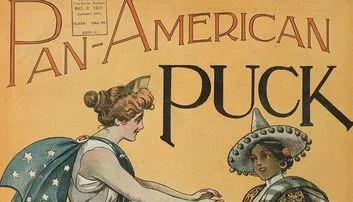
Pan Americanism
The US-led Pan American Union, created in 1890, is generally understood as a form of soft power serving Washington’s interests abroad. Until the end of WWII, it also meant educating US citizens about their new hemispheric responsibilities by promoting Latin American culture, through scientific cooperation, language teaching, art and literature.

“C’era un Ragazzo...Era un muchacho...Era um garoto...”: uma balada pop italiana e seus ecos atlânticos
“C’era un ragazzo che come me amava i Beatles e i Rolling Stones” gravada originalmente em italiano, em 1967, por Gianni Morandi, foi apropriada em vários contextos culturais e nacionais ao representar um “tipo ideal” de juventude e uma forma de protesto político moderado e humanista, contra a Guerra do Vietnã. Porém, nunca foi gravada em inglês...

Le revival de la musique bretonne : une déclinaison locale des contre-cultures américaines
Au tournant des années des années 1960 et 1970, un mouvement revivaliste a produit en Bretagne ce que l’on a qualifié de « folk song breton », de « progressive folk breton », de « folk celtique » ou encore de « Celtic pop music », en quoi l'on peut voir une déclinaison locale de la contre-culture américaine.

Romain Gary: How to Be Someone Else
The novelist Romain Gary had two connected but quite distinct literary careers, in two languages and under four pseudonyms. This essay will look at the way he managed to juggle these various professional identities, with a rather unique understanding of transatlantic cultural relations.

Hitchcock, an Englishman in Hollywood
Alfred Hitchcock's entire career was transatlantic. After fulfilling his dream of accessing Hollywood’s resources, he became one of the world’s most famous directors—but his Britishness largely inspired his American work.

Levitt-villes in France
In 1965, William Levitt, America’s largest home builder and creator of the famous Levittowns, constructed a “new village” in the suburbs of Paris. He built 500 houses in Le Mesnil-Saint-Denis, whose mayor wanted to create an alternative to the grands ensembles he hated. It was a huge success and the first of several Levitt-villes en France.

Saint-Dié-des-Vosges, marraine de l’Amérique ?
C’est dans la ville lorraine de Saint-Dié-des-Vosges, en France, que le mot America fut édité pour la première fois en 1507. Après trois siècles d’oubli, ce fait est progressivement remis en lumière au cours du XIXe siècle, incitant Saint-Dié à s’autoproclamer la « marraine de l’Amérique » et à tenter de mettre en place des liens transatlantiques.

Modernist Photography in Mexico: Modotti’s Letter
Photography reinvented itself in Mexico between the two World Wars, through numerous exchanges between foreign and national artists and writers. This “Mexican moment” of photographic modernism was shaped by left-wing politics, ideas of Mexicanidad spreading at home and abroad, and the emergence of documentary forms.

Soupault and USA: Cinema and Surrealist Poetry in the Roaring Twenties
In the early 1920s, French Surrealist Philippe Soupault saw in American film a new form of modernity capable of regenerating French poetry. This article analyzes the Americanization of an avant-garde movement by examining the role that idealization played.

Can One « Jazz » the French Language ?
The preface to Paul Morand’s collection Magie noire (1929) has been the subject of much discussion, including that of Louis-Ferdinand Céline, who has repeatedly referred to Morand as the first person to have “jazzed” the French language. Taking this metaphor seriously, this article sets out to systematically clarify its meanings.

Ray Ventura and His Collegians: from imitation to a Franco-American hybrid
In the early 1930s, Ray Ventura and His Collegians recorded in Paris covers of hit songs from Hollywood movies and of original compositions that straddled jazz and the French chanson. They elucidate the phenomenon of Americanization.

Blanche and Alfred Knopf: Circulating Transatlantic Literature
In 1915, the Knopfs founded a publishing company focusing on translations of contemporary European literature. Later, they opened their catalogue up to Latin American writers. Their story offers a glimpse into the networks and forms of sociability that drove the transnational cultural dynamics of books.

Photographic Agencies
Photographic agencies developed at the beginning of the 20th century in the context of a rise of illustrated magazines. They operated at an international level, selling images around the world and establishing contacts with partnering agencies on both sides of the Atlantic.

Transatlântico
Mesmo em um cenário historiográfico dominado por olhares globais, o interesse no Atlântico persiste – talvez porque disputas do presente sigam ressignificando travessias oceânicas passadas

Ray Ventura, Jazz and French Chanson: an Ambiguous Americanization
In the 1930s, Ray Ventura and his Collégiens established themselves as a model of French chanson, while the category of “stage jazz”, which they nurtured and perfected, made them a powerful school of Americanization. This article examines what it is in the music itself that feeds this paradox and makes this double entente possible.

The Transatlantic Ballad of Alan Lomax
Studying vocal performance styles during his time in Europe during the 1950s, the US ethnomusicologist Alan Lomax (1915-2002) transformed his regionalist approach to folk songs into a global framework. His “Cantometrics” and “Global Jukebox” projects show how a “reverse” transatlantic experiences can produce transnational maps of song and culture.

From Public Schools to the Pampas: Elements for an Atlantic History of Rugby
Created at around the same time as football/soccer, rugby spread out from England along the pathways of British cultural imperialism. However, it met with a cooler reception than football on both sides of the Atlantic.

American Working Methods in Jacques Tati’s Films and on French Television
Jacques Tati’s films lampoon France’s fascination with the United States during the early postwar period and the spread of rationalization in society in the decades that followed. Television documentaries echoed these trends and took a critical view of the American model.

Johnny Weissmuller
From swimming pools (five Olympic gold medals) to Hollywood, including his appearance in Tarzan, Johnny Weissmuller (1904-1984) became the symbol of America and a transatlantic cultural icon in the inter-war years.

L’Alliance française sur le continent américain
Tournée vers le continent américain dès son origine, l’Alliance française développa ses propres établissements dans les années 1940, en s’appuyant sur des fonctionnaires du ministère de l’Éducation nationale. Ces dernières décennies, son action a adopté une perspective plus nettement interculturelle.

L’orientalisme hispano-américain
L’orientalisme hispano-américain est une dimension de la production littéraire hispanique depuis 1810. Il est tributaire, mais aussi autonome du large corpus orientaliste européen des XIXe et XXe siècles. Dans cette production, l’Orient intègre l’Afrique musulmane, le Proche et le Moyen Orient, l’Inde et l’Asie de l’Est.

The 1972 Olympics Basketball Final between the Soviet Union and the United States
The game marked a turning point in the sport’s history on both sides of the Atlantic. Due to linguistic misunderstandings between the American players, the Soviet coaches and the Brazilian referee, the sport spoke a little less English after 1972.

La Maison de l’Afrique à la Cité internationale universitaire de Paris
Créée au sortir de la Seconde Guerre mondiale, la Maison de la France d’Outre-mer, devenue Maison de l’Afrique puis Résidence Lucien Paye au sein de la Cité internationale universitaire de Paris, constitue un formidable observatoire des circulations étudiantes et politiques entre la France et ses anciennes colonies africaines.

Off Theater
This article traces the transatlantic movements of the idea of alternative theater from the 1940s to today.

Une géographie sociale et culturelle du baseball
La diffusion du baseball hors du pays qui l’a vu naître peut paraître assez déroutante: très faible dans les pays européens, elle est massive dans la zone caraïbe et une partie de l’Amérique latine.

European Research in Kodak’s Early Years
For nearly a century, knowledge management by the Kodak company relied on the circulation of technological information between the US and Europe. The firm’s global influence on visual culture was largely shaped by strong transatlantic connections.

Les déclinaisons atlantiques du Tour de France par deux enfants
Livre de lecture par excellence de l’école laïque sous la Troisième République, Le Tour de la France par deux enfants, paru en 1877, a essaimé de part et d'autre de l'Atlantique où, partout, se croisaient les enjeux de la construction nationale et de l'alphabétisation.

Concert Music in Brazil
Although Brazilian musical modernism had a strong nationalistic appeal, it was also a product of the circulation of works and artists across and around the Atlantic. In addition to Brazilian composers’ stays in Europe and the US the presence of European musicians and intellectuals contributed to bring about a new concept of concert music in Brazil.

Presse en langue étrangère
La presse en langue étrangère, publiée d'un côté comme de l'autre de l'Atlantique, a joué un rôle dynamique au cours des XIXe et XXe siècles, dans la mise en circulation de textes littéraires, d'idées, d'avancées scientifiques et techniques, de modes, de modèles éditoriaux et, même, de pratiques commerciales.

Boris Vian, Inventor of America
During his short life, Boris Vian introduced American culture to France in his two favorite forms: jazz and literature. Having never crossed the Atlantic, he invented an imaginary America where his own passions thrived while remaining a lucid defender of the United States’ enormous cultural contributions.

Francophonie: A Historical Word, A Contemporary Idea
The word Francophonie was created at the end of the 19th century in the context of French colonization. Its meanings are many and have evolved over time. This article aims to capture both the history of this word, and the present condition of a concept that is today embraced by some and rejected by others on all sides of the Atlantic.
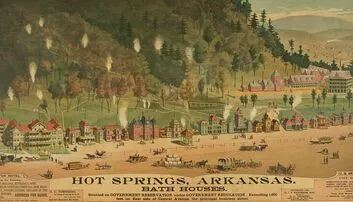
Spas
In the eighteenth century, natural mineral springs spurred the emergence of tourism and played a strategic role on both sides of the Atlantic. Practices, travelers and development models circulated and changed depending on the place. Medical advances caused trajectories to diverge in the twentieth century.

The Photo Novel: a Latin Genre
From 1947 to 1968, the long-scorned photo novel was one of Europe and Latin America’s most popular media formats. This article looks at the genre’s diversity, its outward spread from Italy and the ideological and aesthetic reasons for which it was rejected.

O imaginário revolucionário no cinema de Santiago Álvarez Román
Santiago Álvarez Román (1919-1998) foi um cineasta cubano, diretor dos Noticieros ICAIC, cinejornal oficial da ilha caribenha pós-revolução, que desenvolveu uma inventiva e persuasiva narrativa documentária ao registrar personagens, situações e eventos da realidade político-social nacional e internacional dos anos 1960 aos anos 1990.

Wire Photography and Transatlantic Visual Culture
Beginning in the 1920s, wire photography services used a technology similar to a fax machine to send news pictures across the Atlantic much faster than ever before. News-reading publics used such telecommunicated images to picture how infrastructure had reshaped the spatial relations of modern life.
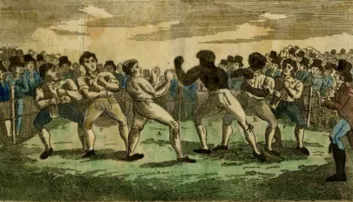
Boxing
Boxing is a major modern sport. Codified in England at the end of the eighteenth century, it became a privileged space of symbolic confrontation of races and nations, dominated by a virile image of manhood. It participated in the regulation of violence, to the detriment of other martial practices in Africa and Europe.

The Paris Opera Ballet in the Americas: Dancing Diplomacy (1948-1950)
The Atlantic area was a privileged space for the Paris Opera Ballet after the Second World War. North and South America hosted two major tours in 1948 and 1950, giving the company an opportunity to win over a new urban audience and firm up its international prestige.

When Booksellers Created the Early Photography Market
Photography catalogues attest to a growing transatlantic trade between 1939 and 1961, when booksellers and bibliophiles played a central role in the commercial development of photography in North American institutions.

Reimagining Todd Webb’s Photographs of 1958 Colonial Africa
This paper charts the path of Todd Webb’s 1958 U.N.-commissioned photographs of colonial Africa across oceans and continents, creating cross-cultural collaborations, resulting in their recent reinterpretation by authors from the African continent and their installation at the National Museum of Tanzania.

Periodizing the Atlantic
A major challenge for the Transatlantic Cultures project has been creating a historical periodization that would explain not only shifting overarching systems of interchange throughout the Atlantic since the end of the 18th century, but also transformations and disruptions specific to places within this space.

Gisèle Freund: The Life of a Story-Teller with Camera, Retold
This re-appraisal of Berlin-born, French-naturalized, Jewish photographer and sociologist Gisèle Freund’s life highlights her transformative years in exile in Argentina and debunks the much-reiterated construction of her career. While her innovative slide show lectures stand out, her status as a concerned photojournalist comes into question.

Maracatus transatlânticos
Grupos típicos de Pernambuco, Brasil, os maracatus expressam através de música, dança e rituais, antigas conexões com a África e os reis negros do período escravista. No século XX, os maracatus passaram a se apresentar no carnaval de Recife e Olinda, e no século XXI vêm se difundindo, como prática de músicos amadores, no Brasil e além-mar.
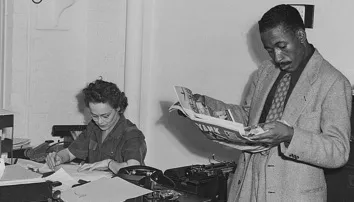
Gordon Parks
Cet article s'intéresse aux tensions générées par la position de Gordon Parks (1912-2006) : un photographe noir employé par des institutions médiatiques blanches nord-américaines en Europe et en Amérique Latine dans les années 1950 et 1960.

Artistic Education and Artist Training
The Atlantic is the setting for many exchanges in the education of artists, especially painters. Since the colonial period mentors and teachers, art students, journals, books, and textbooks have been exchanged, principally between Europe on one side and the Americas and Africa on the other.

William Faulkner, écrivain baroque de la Méditerranée américaine
Faulkner est au carrefour de plusieurs histoires littéraires mais est aussi l'inspirateur de nombreux écrivains du monde atlantique, au point d'incarner un âge baroque américain. Il a aussi été amené à jouer un rôle dans la diplomatie culturelle des Etats-Unis

Amália Rodrigues in Africa
Amália Rodrigues (1920-1999) was responsible for the popularization of fado in her own country and in the Portuguese colonies. The article approaches the relationship between the singer and the Salazar´s dictatorship, as well as the complex meanings of the reception of her songs in the colonial world.

Arturo Alfonso Schomburg
Born in Cangrejos, Puerto Rico, in 1874, Schomburg became close to the group of studies coordinated by the liberal thinker José Julián Acosta. The leitmotiv of the group's discussions was “Negros have no History”.

Bossa Nova & Latin Jazz
The article investigates the phenomenon of Bossa Nova, its most relevant aesthetic traces and the social environment of its creators and supporters, emphasizing its relationships with notions of modernity and tradition. In this sense, it analyses the interactions and translations Bossa Nova has had throughout its circulation.

Domestic Cinema and Travel Films: Images between Brazil and Europe (1920-1930)
In 1922, Pathé-Frères launched the Pathé-Baby projector in the French market, a small hand crank operated apparatus which showed small reels of film in the 9.5mm format. Interested consumers could purchase or rent films, bringing the cinematographic spectacle to the living room.

Comics in Newspapers, Magazines and Books: a Transatlantic Panorama
An overview of the history of comics from a transatlantic perspective. It is focused on the cultural forms of publication, circulation and appropriation of comics and their political implications. The entry goes from comic strips, comic books, underground comics to contemporary graphic novels.
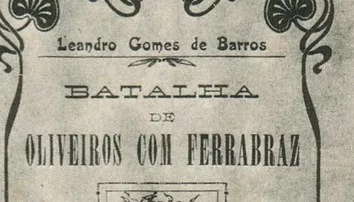
Cordel
The essay adresses the cordel literature as part of a broader set of popular printed literature produced in various countries from 15th to 20th centuries. It examines the cases of Brazil, Portugal, Chile and Spain, regarding themes, texts, materiality, authors, editors and readers.

Disaster and Progress in Cultural Representations of the Titanic
This essay traces the cultural legacy of the Titanic disaster in 1912 in literature, art, cinema, and music.

El mundo impreso en las Exposiciones Universales
Una mirada a las razones la presencia de libros e impresos en las exposiciones universales. Se destacan tanto la evolución de su presencia como la diversidad de sus expositores y objetivos, que abarcaron desde apuestas comerciales, hasta debates sobre la producción de saberes por parte de países no industriales y grupos sociales marginados.

Fernando Ortiz and the Transatlantic Exchange Network
Fernando Ortiz´s pioneering work established the foundations for the study of the black population in Cuba, above all in the field of history and culture.

Franklin Book Programs: The Cold War and US Cultural Imperialism
Franklin Book Programs was a non-governmental US program aimed at stimulating the publishing market and reading practices during the Cold War. In different ways, Africa and Latin America were envisaged by the program.

South Atlantic
South Atlantic is approached as a space of circulation over three distinct periods. The first begins in 1500, when the Portuguese Admiral Álvares Cabral reached the South American coast. This period ends with the end of the bilateral slave trade between Brazil and Africa (1850). The independence of African nations started a third period.

La diplomacia cultural de México en el Siglo XX
La diplomacia cultural fue un componente importante en la política exterior de México a lo largo del Siglo XX. Se ejerció principalmente a través de la nominación de intelectuales como diplomáticos, la participación del país en ferias internacionales, su influencia en la UNESCO y el componente cultural del Tratado de Libre Comercio (TLCAN).

The Rockefeller Foundation and the International Funding of Science (1920s-1950s)
The history of the Rockefeller Foundation’s international science policy highlights the pivotal role American philanthropic organizations played in the knowledge-building process during the 20th century.

La réception française de la pensée de Dewey dans le champ éducatif
La pensée éducative de John Dewey a connu une réception contrastée au cours du siècle qui s’est écoulé depuis sa prime apparition dans l’espace hexagonal. Entre traductions, appropriations, rejets et parfois incompréhension, il s’agit ici de retracer les grandes lignes qui jalonnent la circulation transatlantique de ses idées.

Yiddish: Language, Culture and Memory from the late 19th century to the present
From the late 19th century, the Yiddish language and culture had an intensely transatlantic moment made possible by the rich cultural circulation between the original home of the lingua franca of Central and Eastern European Jews and Western Eu-rope, the Americas and other parts of the world.

Transatlantic Authors in European Publishing after 1945
This article on the circulation of books in the transatlantic space starts with a historically datable observation: the lopsided exchanges between European countries and their colonies in the 19th century. When Europe discovered the richness of African and Latin American literatures, the balance became more equal, especially after 1945.

Modernist Photography in Mexico: Networks of Migration
As active participants in the Mexican cultural renaissance, Edward Weston, Tina Modotti and Manuel Álvarez Bravo engaged in a global discourse of modernism through transatlantic connections. Networks of migration in, out, and around these three artists show that Mexico City was a modernist center rivaling Paris and New York in the interwar period.
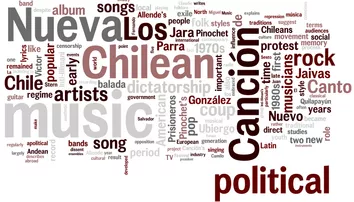
Nueva Canción
During the 1940s and 1950s, the arts became a symbolic battlefield and ‘folklore’ was understood as a place of resistance to the domination of foreign imperialism. Nueva Canción was born in this envoirenment.

Cinema at World’s Fairs: Historical and Cultural Practices
This article addresses the historical and cultural practices that involve the cinema in the transatlantic space. As a case study, we examine the participation of cinema in universal exhibitions, and, in particular, the International Exhibition of the Centenary of Independence of Brazil, held in 1922 and 1923 in the city of Rio de Janeiro.

Orson Welles, Citizen of the World
Orson Welles was born in 1915 in Kenosha, Wisconsin, but he often told interviewers that he was “conceived” in either Paris or Rio. This essay examines the different aspect of his career, in the USA, Latin America and Europe, focusing on transatlantic and Pan American exchanges.

Paulin Soumanou Vieyra
Paulin Soumanou Vieyra (1925-1987) nasceu em Porto Novo (Benin). Estudou no Institut des hautes études cinématographiques (IDHEC) em Paris. Sua biografia e cinematografia revelam a trajetória de um cineasta da diáspora africana inspirado pelo movimento da Negritude e cujos filmes integram o patrimônio cultural do Atlântico negro.

Réception genevoise du Plan Dalton et de la pédagogie de Winnetka
H. Parkhurst (plan Dalton) et C. Washburne (écoles de Winnetka) sont deux pédagogues américains précurseurs de l’individualisation des apprentissages. En Europe, ce sont d’abord les pédagogues genevois qui se sont intéressés à leurs travaux. Leurs écrits et interventions témoignent toutefois d’une réception contrastée de ces propositions.
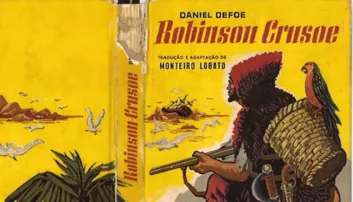
Robinson Crusoe
In 1719, Daniel Defoe published The Life and Adventures of Robinson Crusoe. The story and the circulation of the book are an extraordinary example of the transatlantic dimension of the text.

The American Century
In 1941, the influential publisher Henry Luce declared the century “American.” The United States’ new role was to redefine the world order, and this mission relied not only upon military power but also upon prestige and culture. To a large extent, this “universal” America was shaped by a historical and geographical construction of the Atlantic.

Transatlantic Cartographies of Popular Music in the Americas
Popular music is frequently analyzed through national ‘musical genres,’ consecrated through specific aesthetic and socio-cultural conventions, and usually formed over various decades. The historiography of music has been problematizing this approach based on a national focus. This article try to map this debate.

United States Information Agency
En 1953, la guerre froide pousse le président Eisenhower à créer une agence indépendante du Département d’État, l’USIA (United States Information Agency), qui orchestre les stratégies d’influence des États-Unis jusqu’en 1999. Des pratiques de cette agence naît le concept de diplomatie publique, théorisé par Edmund Gullion en 1965.

Was “American” Photography a European Invention?
This paper explores the dialogue between European and “American” photography from the end of the 1930s to the 1980s, focusing on the character of Robert Capa, a founding member of Magnum Photos, on the debates within this cooperative, and on Robert Frank’s 1958 seminal opus, The Americans.
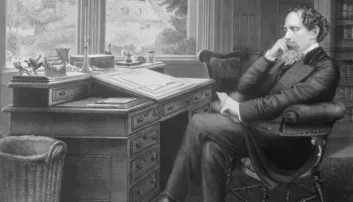
Literary Agents
Over the course of the 20th century, literary agents have maintained an important role in the transatlantic circulation of texts. As both economic and cultural negotiators, these men and women are at the heart of the transnational cultural history of printed material.

Marcus Garvey
Marcus Mosiah Garvey (1887-1940) is a major figure of Black nationalism and Pan Africanism. An indefatigable orator, world traveler and skilled organizer, he was also a charismatic, controversial personality who founded the largest Black organization in history, the Universal Negro Improvement Association (UNIA).
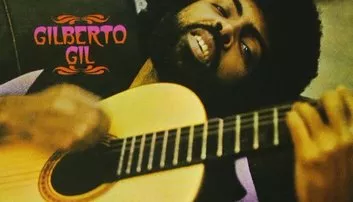
Gilberto Gil
“I knew that music would be my language and that I would discover the world through it.” From the Tropicália movement to his collaboration with Jimmy Cliff, famous Brazilian composer, singer and guitarist Gilberto Gil has been an important cultural broker. His trajectory captures the range of musical genres of the Atlantic world.

The Book of Knowledge between the ‘Old’ and the ‘New’ World: history of an encyclopedia
The Children’s Encyclopaedia, created by Arthur Mee in England, in early 20th century, became, by the hands of the publisher W. M. Jackson, the "book of knowledge" for American children and men of the people.

Luigi Nono: Revolutionary Experiences and American Networks
During his travels in Latin America and the United States, the composer and Communist activist Luigi Nono forged intense ties with artistic, intellectual, and political circles, reflecting the ideological issues of the Cold War and contributing to the circulation of aesthetic and technical innovations.

Susan Sontag: uma intelectual pública
Judia, Susan Sontag nasceu em New York, estudou literatura, filosofia e teologia em renomadas universidades, como as universidades de Berkeley, Chicago e Sorbonne. Como escritora e ativista, abalou circuitos culturais e políticos de sua época com sua crítica.

Wifredo Lam and Transversal Surrealism
Cuban-born artist Wifredo Lam was a key figure of Surrealism's transversal network in the 20th century. His work explored Afro-Caribbean syncretism and the haunting memory of the transatlantic slave trade. His resistance against colonial oppression developed in later collaborative projects with Aimé Césaire and Joyce Mansour.

Henri Barbusse: Pacifism and Antifacism in the Americas
One of the first ‘war novels’ to be published in the twentieth century, Le Feu made Henri Barbusse internationally popular. The repercussion of the work as a manifesto about the banality of war and the defense of pacifism gave the author the status of an intellectual commited to his time.

Faire comprendre la Suisse aux Américains : la radio internationale helvétique après la Seconde Guerre mondiale
La radio, en particulier avec le développement des ondes courtes, est un outil indispensable au gouvernement suisse pour lui permettre de répondre aux critiques formulées par les Alliés sur l’attitude ambiguë du pays pendant la Seconde Guerre mondiale. Cette notice souligne le rôle de la radio dans la diplomatie culturelle suisse de l'après-guerre.

Immigrants in New York: Cinematographic Representations (1898-1914)
Statue of Liberty, a small film of approximately fifty seconds produced by the Thomas Edison Company, can be considered one of the first cinematographic representations of the arrival of a transatlantic ship in New York.

From Europe to Hollywood, and Back. The Classic Hollywood Film Score
How did migrations of composers from Central and Eastern Europe to the United States shape the sound of Hollywood cinema? This article analyzes the transfer of musical repertoires and practices that gave birth to the Classic Hollywood Film Score in the 1930s and the feedback effects in Europe.

Freud and Latin America: An Early Relationship
Throughout the 20th century, psychoanalysis has generated a “culture”, vastly overflowing its original scope. This article explores the condition existing, both in psychoalysis as a system of thought and beliefs and in the receiving cultures, related to the lasting relationship between the ideas inspired in Freud and some Latin American cities.