Espaço
Caribe
Artigos (38)

Les routes du rhum : réseaux impériaux et deuxième mondialisation
Au tournant des XIXe et XXe siècles, le rhum apparaît comme un produit phare de la deuxième mondialisation. La modernisation de la production dans l’espace caribéen et les bouleversements de la navigation transatlantique entraînent un essor des flux entre les Antilles et l’Europe et l’émergence de nouveaux imaginaires liés à cet alcool colonial.

Nina Simone’s Soundscapes of Exile and Return
Analyzing songwriting, performances, and interviews, this essay explores Nina Simone as a transatlantic cultural figure through the themes of protest, exile, and Black womanhood. Tracing Simone’s movements across the Atlantic illuminates enduring questions of race, refuge, and cultural belonging that continue to shape Black diasporic life today.

Écrire l’histoire des femmes et de la photographie dans l’espace atlantique
Les femmes ont contribué à façonner l’histoire de la photographie et de ses circulations transatlantiques depuis les débuts du medium. Écrire cette histoire du point de vue des femmes invite à déplacer notre regard et nos cadres de lecture pour mettre en lumière leurs rôles de passeuses à la croisée des scènes culturelles.

Sarah Maldoror
Sarah Ducados, conhecida como Sarah Maldoror, é considerada a primeira mulher negra a fazer cinema na África nos anos 1960. Seu longa-metragem mais conhecido, Sambizanga (1972), é uma adaptação da obra do escritor Luandino Vieira sobre a guerra de independência de Angola.

East Berlin‒Havana‒Maputo: Triangular Cultural Diplomacy between Socialist “Brother Countries” (1970–1990)
The cultural exchange policies put in place from the 1970s through the 1980s between Cuba, the GDR et certain African countries reveal a nuanced mapping of the socialist camp in the last decades of the Cold War.

The Creole Atlantic
How can cultural exchanges across the Atlantic be theorized outside of Gilroy’s Black Atlantic heuristic, especially when looking at cultural practices developing in Africa? The idea of a Creole Atlantic allows for including South-South connections and situating a redefined, creolized Africa at the core of the Atlantic paradigm.

Musical Dialogues between Cuba and West Africa in the Cold War
In the middle of the 1960s in Cuba, young Malian musicians created the band Las Maravillas de Mali. The essay explores the political and musical transatlantic dialogues between Malian and Cuban musicians in the light of the cultural diplomatic exchanges initiated between Cuba and newly independent socialist African countries within the Cold War.
Los Nuevos Cines
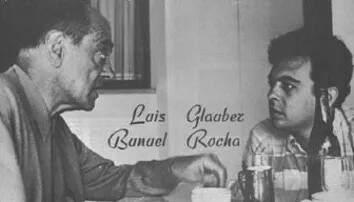
Usamos el concepto de “nuevos cines” para abordar un proceso que va desde mediados de los años cincuenta hasta mediados de los años setenta. Quizás aquello que todas tienen en común es lo que Francesco Casetti llama un “sentimiento de novedad”, una voluntad de romper con las formas tradicionales de concebir y producir el cine.
Pan Americanism
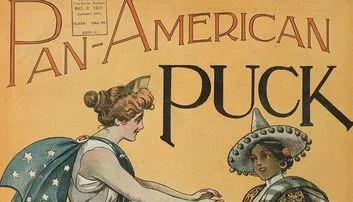
The US-led Pan American Union, created in 1890, is generally understood as a form of soft power serving Washington’s interests abroad. Until the end of WWII, it also meant educating US citizens about their new hemispheric responsibilities by promoting Latin American culture, through scientific cooperation, language teaching, art and literature.

Solitude, du roman au musée : l’œuvre mémorielle d’André Schwarz-Bart
Figure légendaire de l’histoire antillaise et de l’univers des plantations, Solitude, l’héroïne du roman d’André Schwarz-Bart assassinée par des Français, incarne le droit à la liberté et à l’égalité. Deux statues et un jardin lui sont dédiés. Mais, au musée de l’esclavage en Guadeloupe, Solitude et André Schwarz-Bart sont oubliés.

The Transatlantic Ballad of Alan Lomax
Studying vocal performance styles during his time in Europe during the 1950s, the US ethnomusicologist Alan Lomax (1915-2002) transformed his regionalist approach to folk songs into a global framework. His “Cantometrics” and “Global Jukebox” projects show how a “reverse” transatlantic experiences can produce transnational maps of song and culture.

L’orientalisme hispano-américain
L’orientalisme hispano-américain est une dimension de la production littéraire hispanique depuis 1810. Il est tributaire, mais aussi autonome du large corpus orientaliste européen des XIXe et XXe siècles. Dans cette production, l’Orient intègre l’Afrique musulmane, le Proche et le Moyen Orient, l’Inde et l’Asie de l’Est.

Une géographie sociale et culturelle du baseball
La diffusion du baseball hors du pays qui l’a vu naître peut paraître assez déroutante: très faible dans les pays européens, elle est massive dans la zone caraïbe et une partie de l’Amérique latine.
Hispano-Americanism
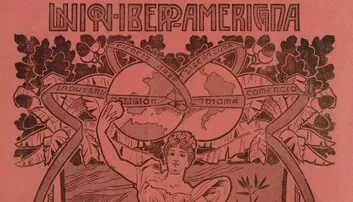
Hispano-Americanism, which emerged in the 1880s and lasted throughout the twentieth century, was a movement that spread in Spain and Latin America to strengthen ties between countries sharing Hispanic culture in the name of a shared heritage.

Presse en langue étrangère
La presse en langue étrangère, publiée d'un côté comme de l'autre de l'Atlantique, a joué un rôle dynamique au cours des XIXe et XXe siècles, dans la mise en circulation de textes littéraires, d'idées, d'avancées scientifiques et techniques, de modes, de modèles éditoriaux et, même, de pratiques commerciales.

Francophonie: A Historical Word, A Contemporary Idea
The word Francophonie was created at the end of the 19th century in the context of French colonization. Its meanings are many and have evolved over time. This article aims to capture both the history of this word, and the present condition of a concept that is today embraced by some and rejected by others on all sides of the Atlantic.
Spas
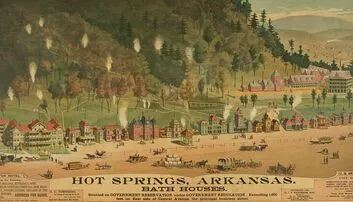
In the eighteenth century, natural mineral springs spurred the emergence of tourism and played a strategic role on both sides of the Atlantic. Practices, travelers and development models circulated and changed depending on the place. Medical advances caused trajectories to diverge in the twentieth century.

Fonografia digital e circulação musical transatlântica
O artigo apresenta os principais processos envolvidos na produção e circulação da música gravada promovidos pela tecnologia digital em geral e no mundo transatlântico.

Instituto Cubano del Arte e Indústria Cinematográficos
ICAIC foi o primeiro organismo cultural criado em Cuba após a Revolução, em acordo com a Lei 169 de 24 de Março de 1959.

O imaginário revolucionário no cinema de Santiago Álvarez Román
Santiago Álvarez Román (1919-1998) foi um cineasta cubano, diretor dos Noticieros ICAIC, cinejornal oficial da ilha caribenha pós-revolução, que desenvolveu uma inventiva e persuasiva narrativa documentária ao registrar personagens, situações e eventos da realidade político-social nacional e internacional dos anos 1960 aos anos 1990.
Boxing
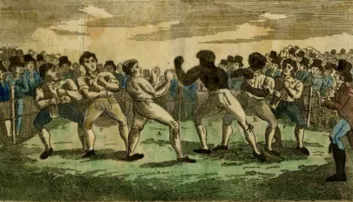
Boxing is a major modern sport. Codified in England at the end of the eighteenth century, it became a privileged space of symbolic confrontation of races and nations, dominated by a virile image of manhood. It participated in the regulation of violence, to the detriment of other martial practices in Africa and Europe.

Periodizing the Atlantic
A major challenge for the Transatlantic Cultures project has been creating a historical periodization that would explain not only shifting overarching systems of interchange throughout the Atlantic since the end of the 18th century, but also transformations and disruptions specific to places within this space.

Artistic Education and Artist Training
The Atlantic is the setting for many exchanges in the education of artists, especially painters. Since the colonial period mentors and teachers, art students, journals, books, and textbooks have been exchanged, principally between Europe on one side and the Americas and Africa on the other.

Arturo Alfonso Schomburg
Nascido em Cangrejos, Porto Rico, em 1874, Schomburg aproximou-se do grupo de estudos coordenado pelo pensador liberal José Julián Acosta. O leitmotiv das discussões no grupo era “os negros não têm história”.

Fernando Ortiz e a rede transatlântica de intercâmbios
Fernando Ortiz (1881-1969) desenvolveu uma obra pioneira que estabeleceu os fundamentos para o estudo sistemático do papel da população negra na história de Cuba, sobretudo no campo das relações raciais e das manifestações culturais.
Glauber Rocha
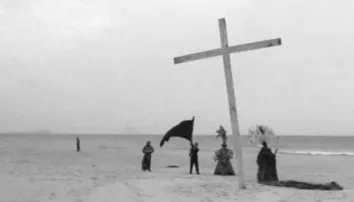
A dimensão transatlântica do projeto estético do cineasta brasileiro Glauber Rocha será discutida a partir de três aspectos: 1) Sua experiência biográfica; 2) O universo dramatúrgico e narrativo de seus filmes; 3) Os esquemas iconográficos do seu cinema.

La diplomacia cultural de México en el Siglo XX
La diplomacia cultural fue un componente importante en la política exterior de México a lo largo del Siglo XX. Se ejerció principalmente a través de la nominación de intelectuales como diplomáticos, la participación del país en ferias internacionales, su influencia en la UNESCO y el componente cultural del Tratado de Libre Comercio (TLCAN).

Yiddish: Language, Culture and Memory from the late 19th century to the present
From the late 19th century, the Yiddish language and culture had an intensely transatlantic moment made possible by the rich cultural circulation between the original home of the lingua franca of Central and Eastern European Jews and Western Eu-rope, the Americas and other parts of the world.

Transatlantic Authors in European Publishing after 1945
This article on the circulation of books in the transatlantic space starts with a historically datable observation: the lopsided exchanges between European countries and their colonies in the 19th century. When Europe discovered the richness of African and Latin American literatures, the balance became more equal, especially after 1945.
Nueva Canción
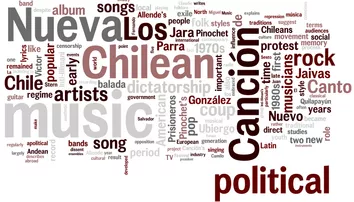
Nos anos 1940s e 1950s, as artes latino-americanas se tornaram um campo de batalha e o folclore foi entendido um lugar de resistência à dominação imperialista. A Nova Canção nasceu nesse ambiente.

Paulin Soumanou Vieyra
Paulin Soumanou Vieyra (1925-1987) nasceu em Porto Novo (Benin). Estudou no Institut des hautes études cinématographiques (IDHEC) em Paris. Sua biografia e cinematografia revelam a trajetória de um cineasta da diáspora africana inspirado pelo movimento da Negritude e cujos filmes integram o patrimônio cultural do Atlântico negro.

Revista Cine Cubano
A revista Cine Cubano, criada em 1960, promoveu por mais de quatro décadas a circulação de notícias e resenhas sobre o cinema latino-americano e sua difusão no mundo todo. Registrou produções e visitas de cineastas a Cuba, festivais internacionais e importantes debates envolvendo filmes, realizadores e o papel do cinema na sociedade contemporânea.
Robinson Crusoé
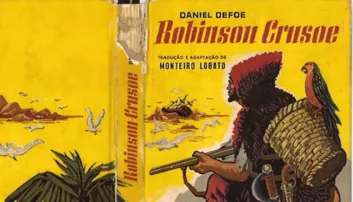
Em 1719, o romance de Daniel Defoe, Vida e Aventuras de Robinson Crusoe, teve inúmeras edições e se transformou em grande sucesso editorial. A trama e a circulação do livro são um extraordinário exemplo da dimensão transatlântica do texto.

The American Century
In 1941, the influential publisher Henry Luce declared the century “American.” The United States’ new role was to redefine the world order, and this mission relied not only upon military power but also upon prestige and culture. To a large extent, this “universal” America was shaped by a historical and geographical construction of the Atlantic.

Transatlantic Operatic Networks during the Nineteenth Century
This article explores operatic networks in the nineteenth century, with a focus on mobility between the Americas, Europe, and the Caribbean. After a brief introduction to the history of opera in these places, it goes on to consider themes of infrastructure and agency, as well as methodological questions relating to the study of these networks.

Marcus Garvey
Marcus Mosiah Garvey (1887-1940) is a major figure of Black nationalism and Pan Africanism. An indefatigable orator, world traveler and skilled organizer, he was also a charismatic, controversial personality who founded the largest Black organization in history, the Universal Negro Improvement Association (UNIA).

Luigi Nono: Revolutionary Experiences and American Networks
During his travels in Latin America and the United States, the composer and Communist activist Luigi Nono forged intense ties with artistic, intellectual, and political circles, reflecting the ideological issues of the Cold War and contributing to the circulation of aesthetic and technical innovations.

Wifredo Lam and Transversal Surrealism
Cuban-born artist Wifredo Lam was a key figure of Surrealism's transversal network in the 20th century. His work explored Afro-Caribbean syncretism and the haunting memory of the transatlantic slave trade. His resistance against colonial oppression developed in later collaborative projects with Aimé Césaire and Joyce Mansour.